Apollo
Product Design
UI/UX Design
User Research
2025
Overview
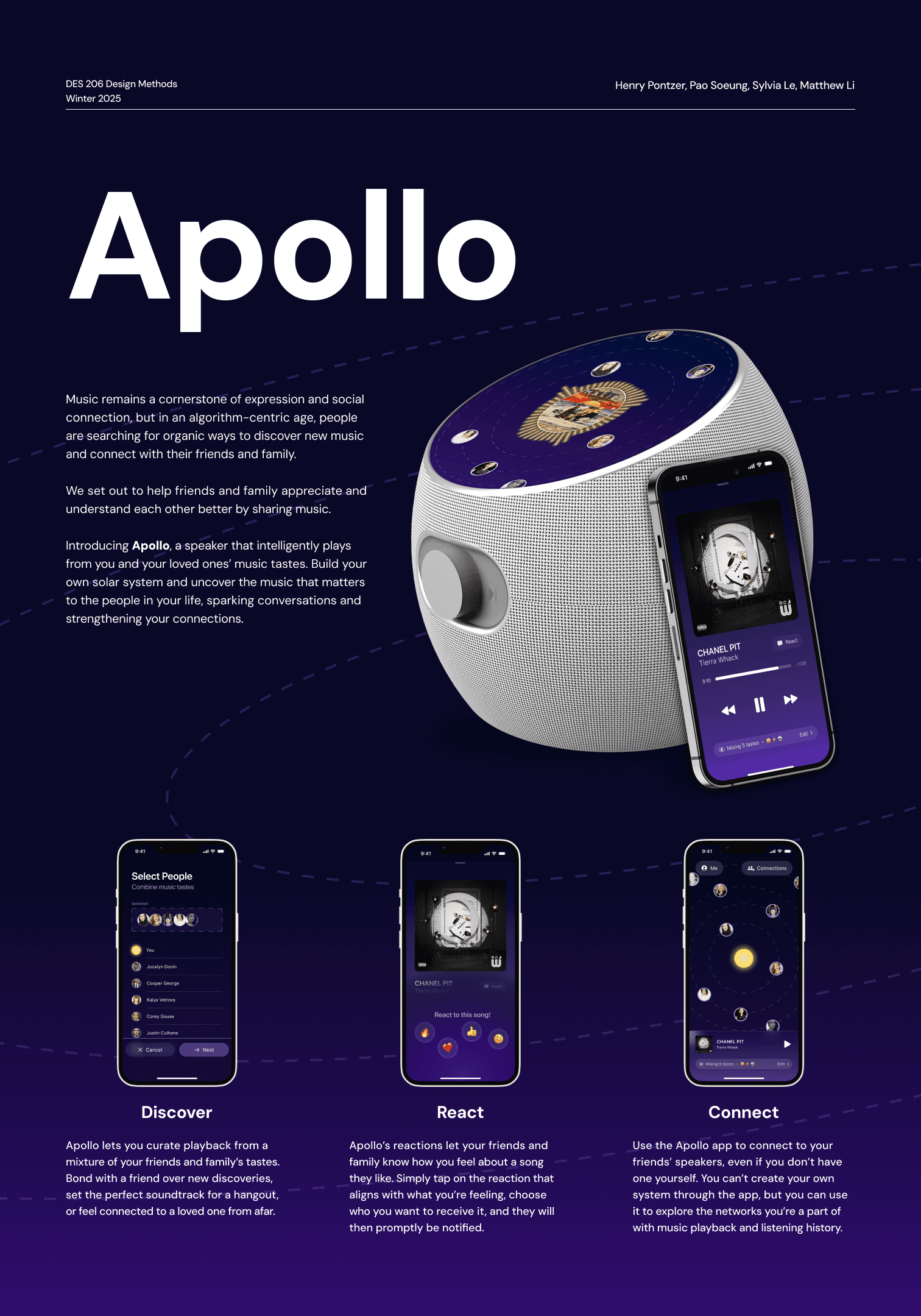
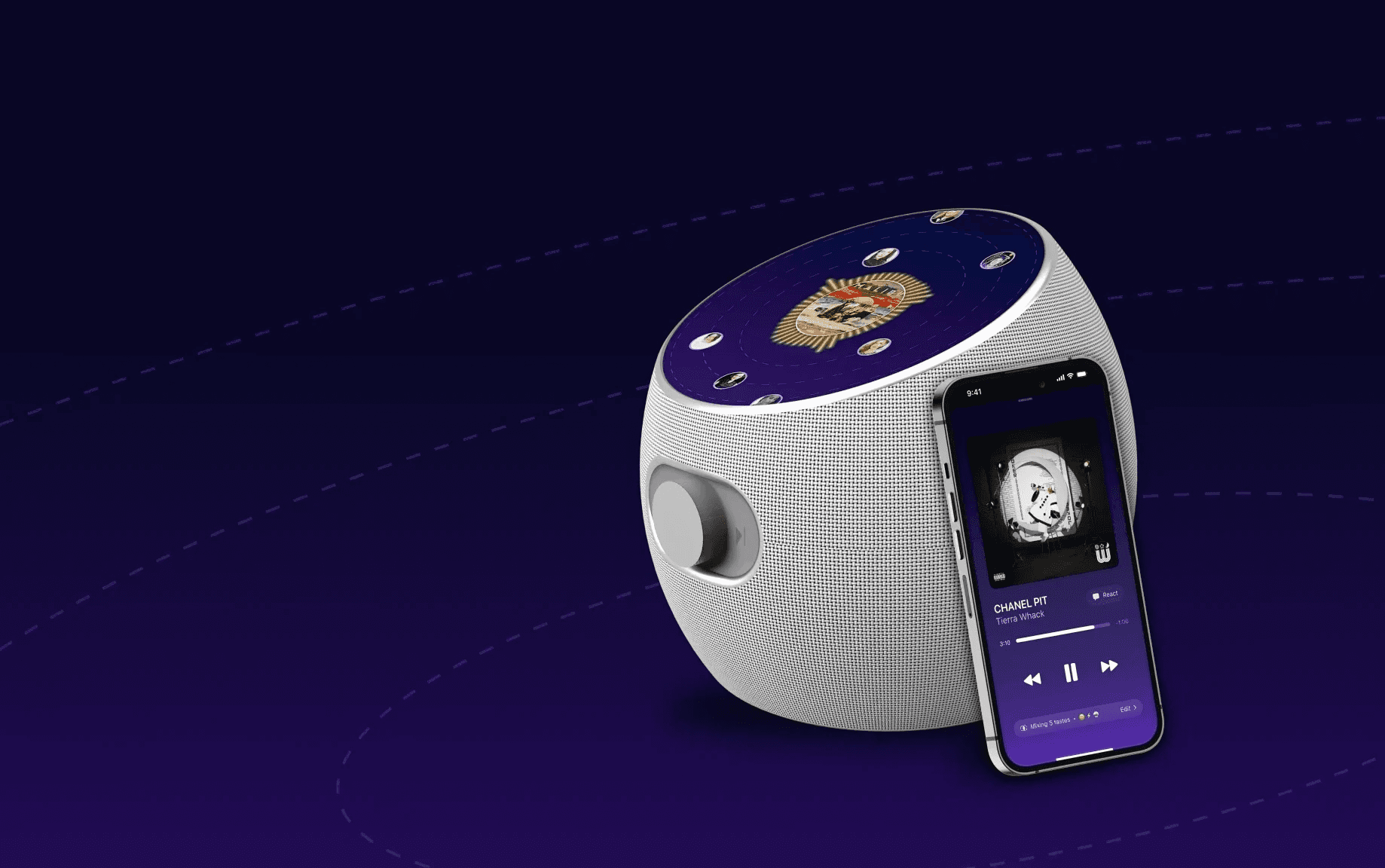
Apollo is a smart speaker that plays music curated from you and your loved ones’ music tastes. Build your own solar system, uncover the music that matters to the people in your life, and deepen your connections.
Timeline
10 Weeks
Team
Henry Pontzer
Pao Seoung
Matthew Li
Role
User Research
Product Design
Storyboarding
Video Editing
Research
Understanding the problem space
In order to gain insights to the relationship between people and music we used three methods to gather various data.
General Questionnaire
We began with a general questionnaire to gauge statistics revolving around music listening habits, and also used it to find potential participants to interview. Our survey received over 100 responses and of those, there were about 40 potential interviewees, which was narrowed down to 10.
Interview
We used questions to delve deeper into people's music listening habits. How they listened to music, when do they usually listen to music, and why if there are consistent genres they prefer for those activities. Other questions revolved around the participants' mood and memories
Photo Study
Participants were asked to send pictures and songs they felt were related, and with it a short explanation of the connections.
Ideation
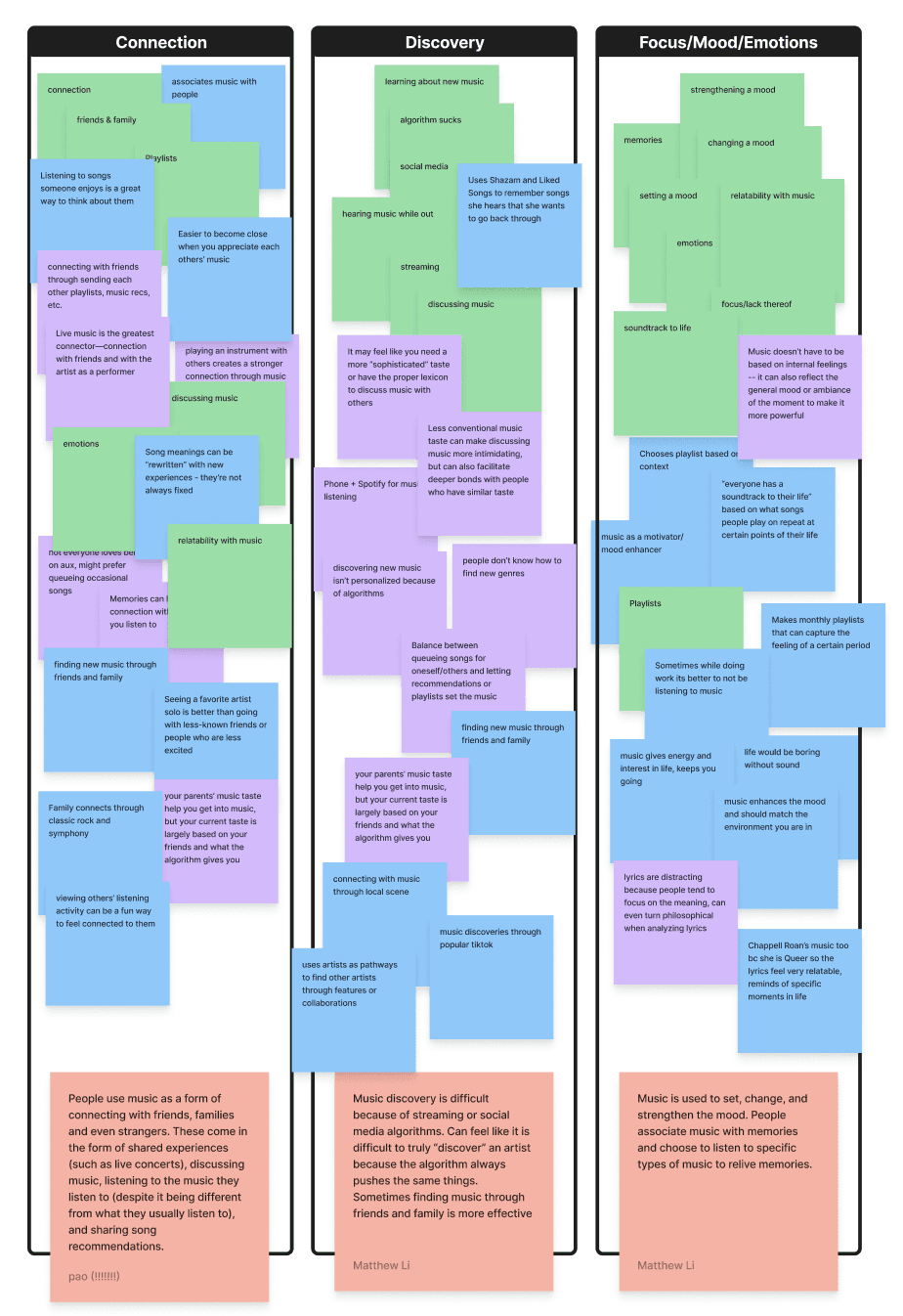
data synthesis revealed three key points
Multiple participants used music to connect loved ones. Multiple participants stated that they listened to music that their parents or grandparents like in order to feel more connected to them.
A majority of participants used music to influence mood. They felt that music has a strong impact on their mood, so depending on the activity they will listen to certain genres and songs.
Participants felt unsatisfied with current music discovery algorithms. They felt it was unpersonalized and overly algorithmic.
OPPORTUNITY
How might we use the act of sharing music between friends and family to strengthen their appreciation and understanding of each other?
Accessibility
We want people to feel like they can openly share their music.
Authenticity
We want our product to encourage people to connect.
community
We want our product to be easy to use by a diverse audience.
Iteration
Crazy eights
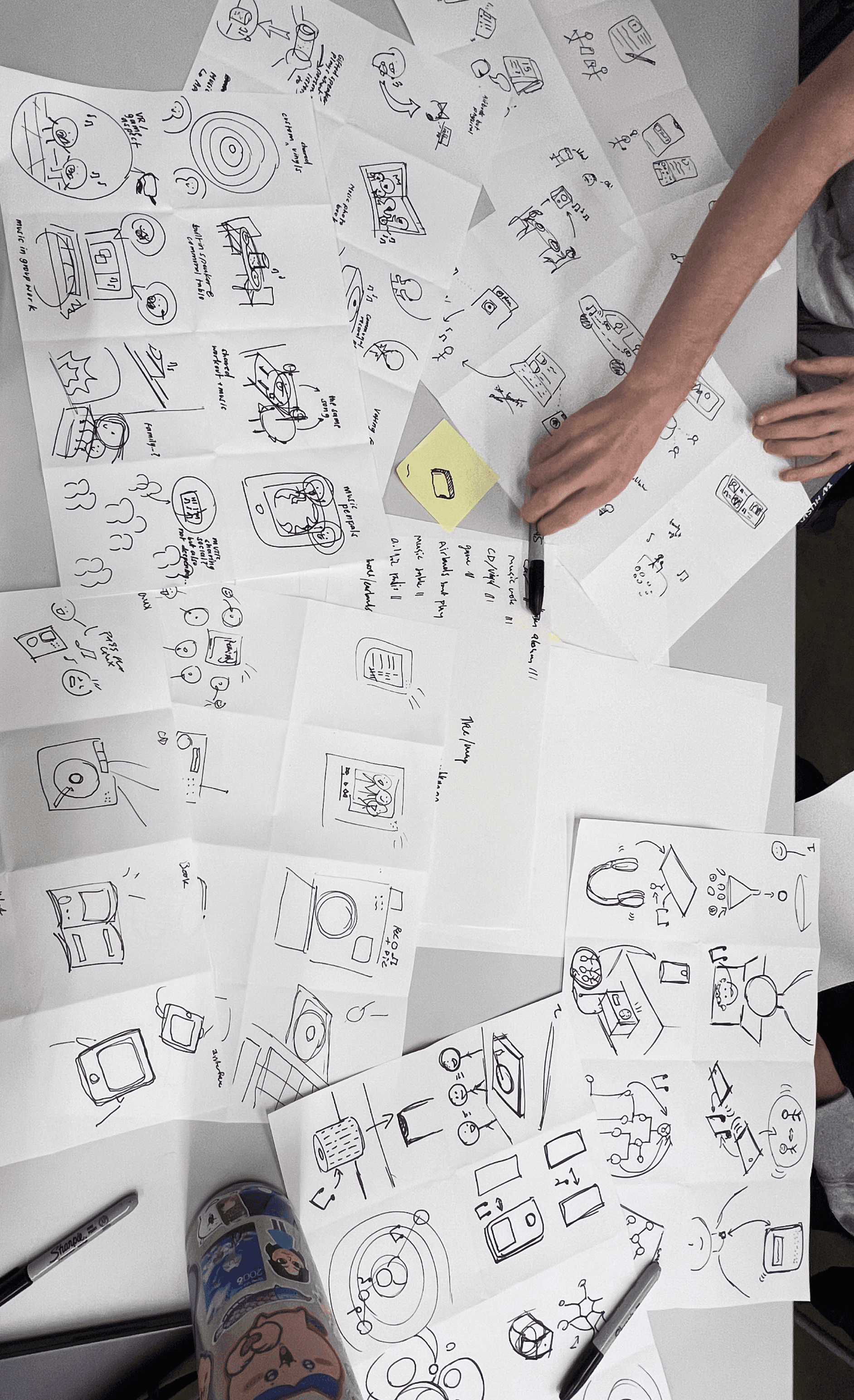
From there, we used the Crazy Eights design strategy, where we drew eight solutions for eight minutes each to quickly generate a large amount of ideas.
Down-selecting
We ended up with roughly 60 ideas and later narrowed it down to the most distinct three that aligned most with our How Might We Statement. The final idea we decided to continue with was the music mapping speaker because it had the most possibilities for its features and outcomes. It also was the one we felt most passionate about.
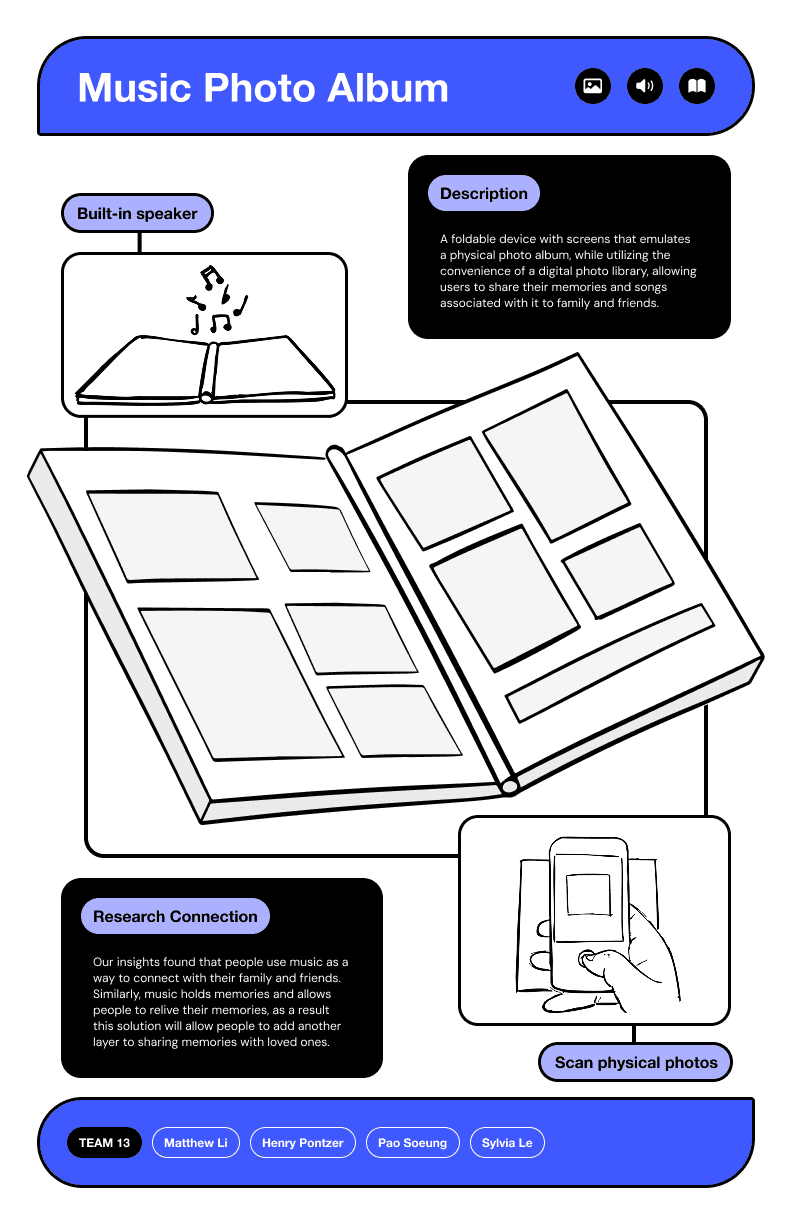
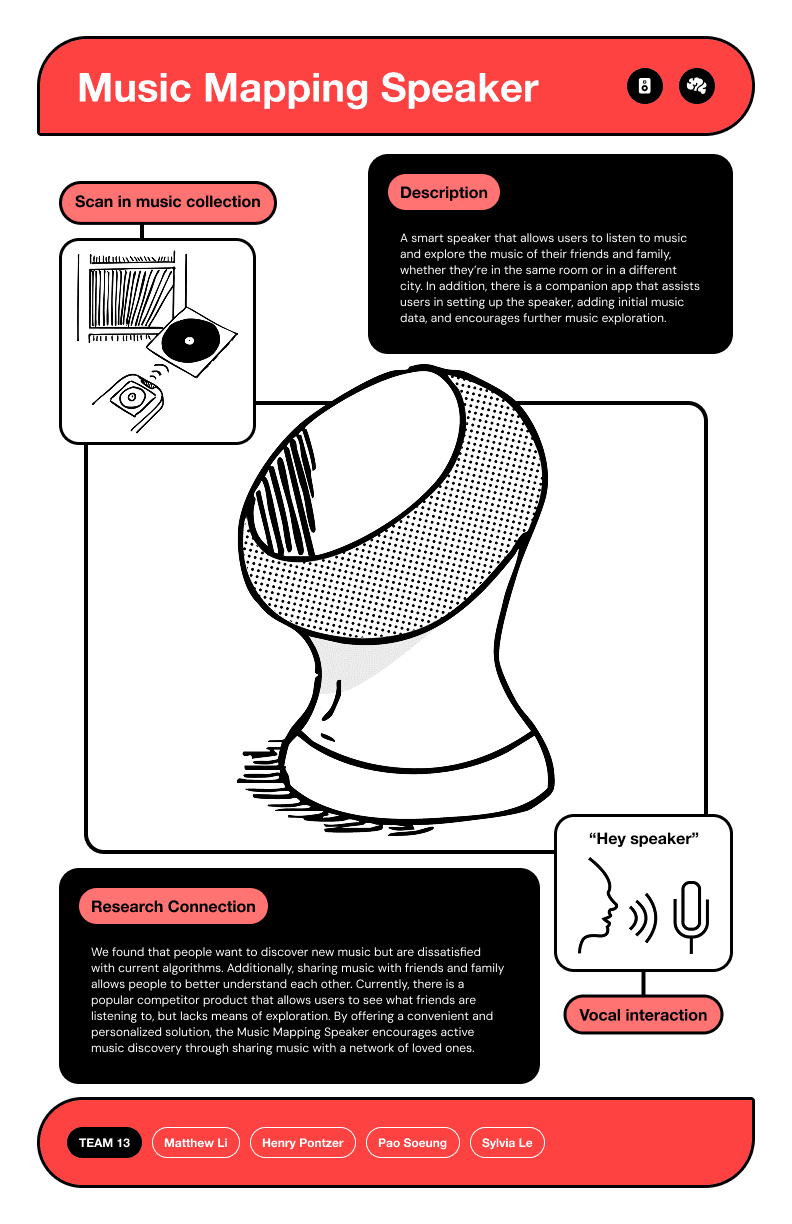
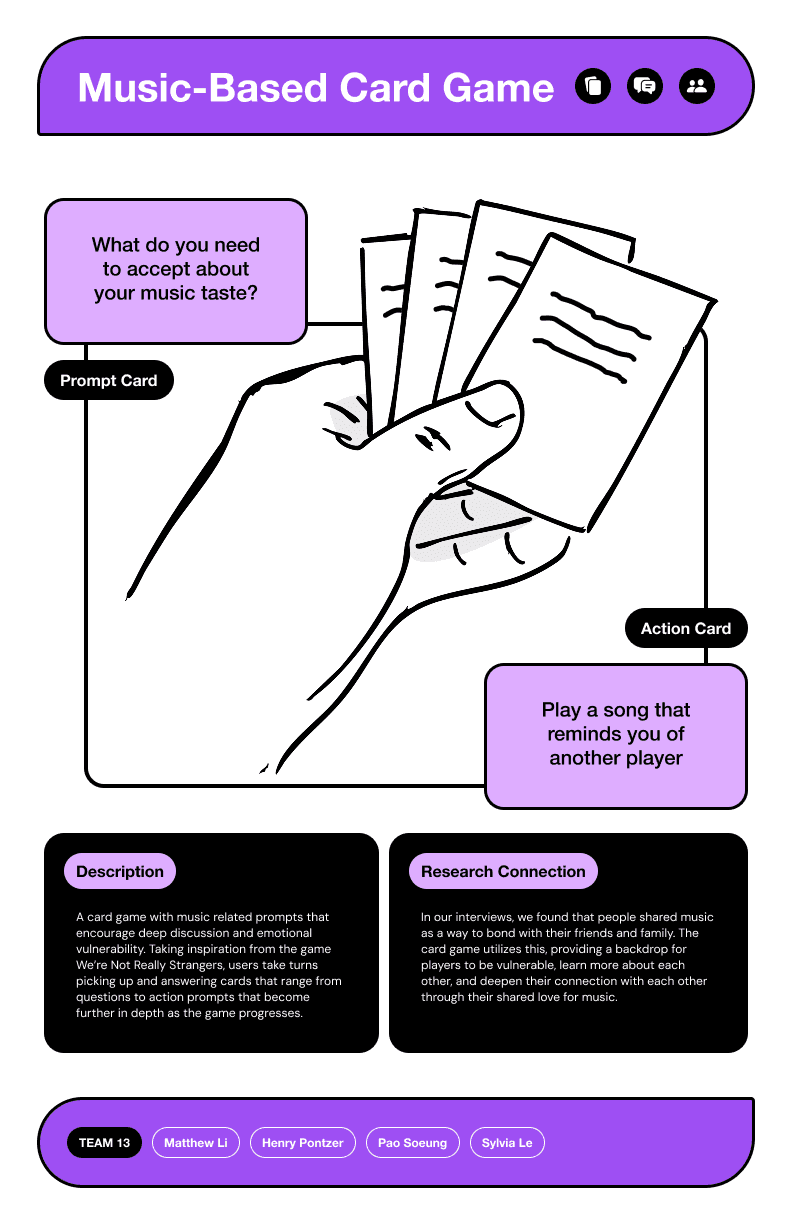
Brainstorming Product Features
Continuing forward, we began thinking of inputs and outputs of our solution, such as the types of information the speaker would collect and what would be the end result of that process.
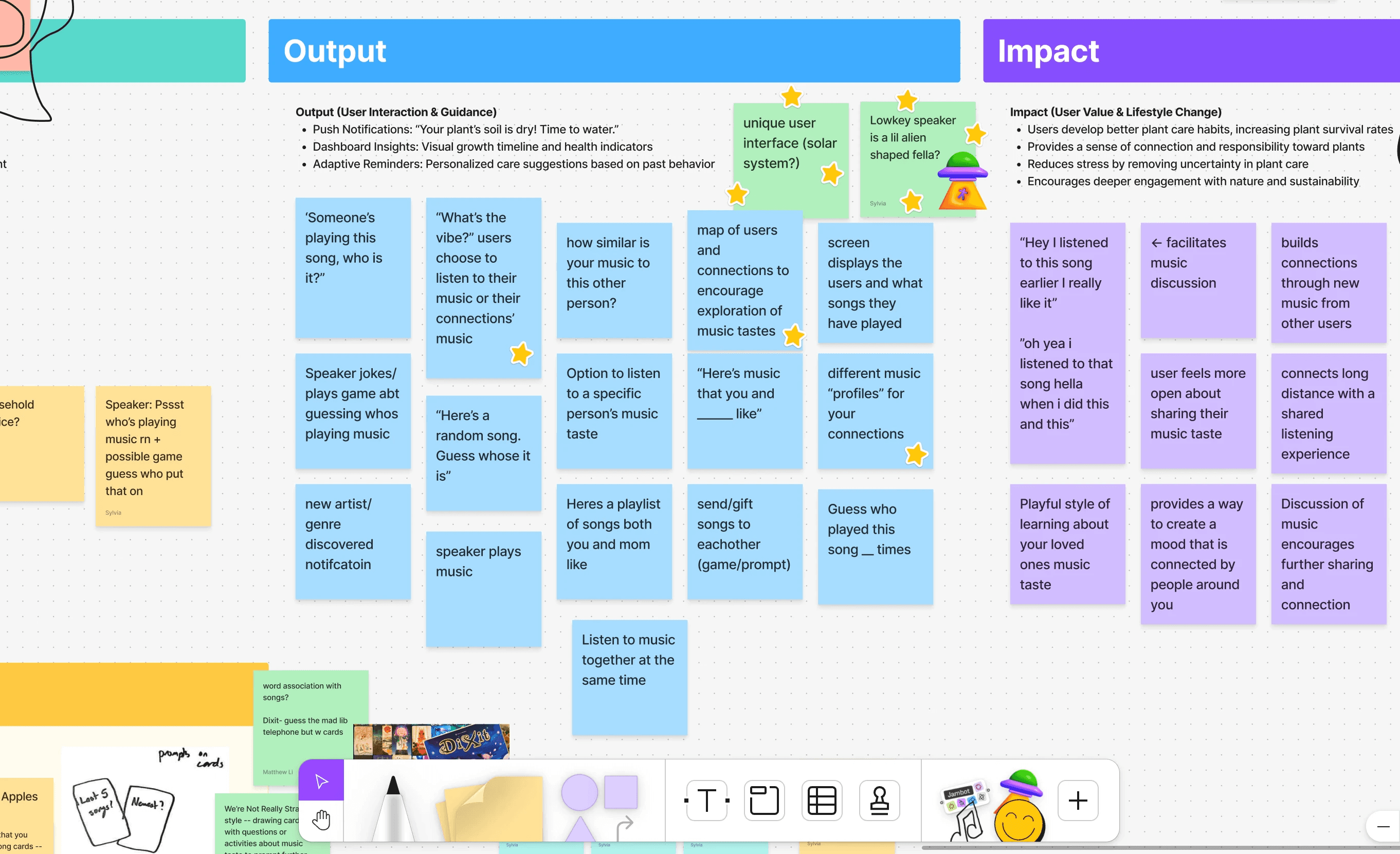
User Testing
We then set up a participatory user workshop with college students. The activities they did consisted of voting on features, drawing the user’s ideal speaker and interface, and roleplaying scenarios. The goal of these activities was to gain a closer understanding of how users would interact with the speaker.
Storyboarding
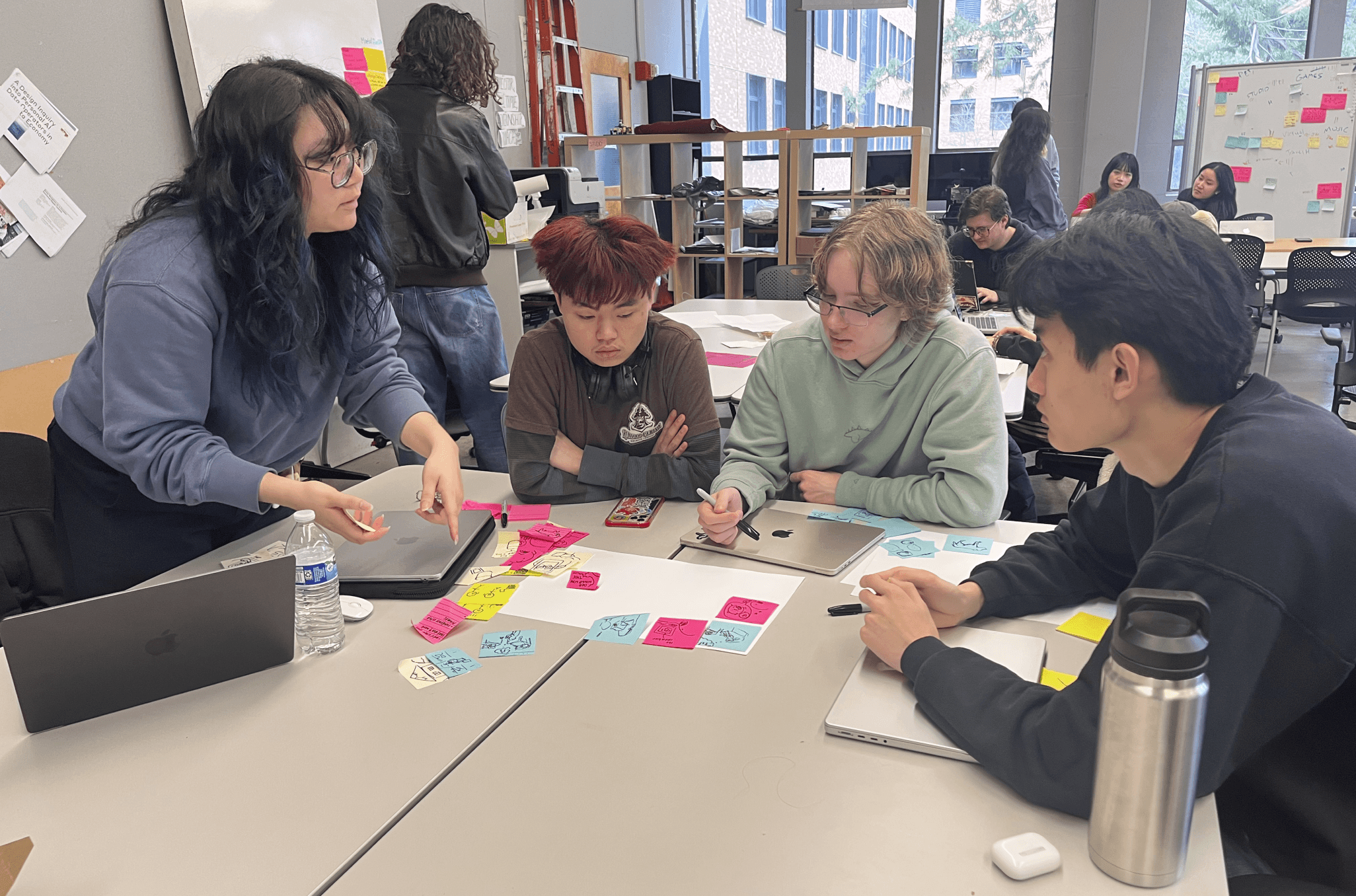
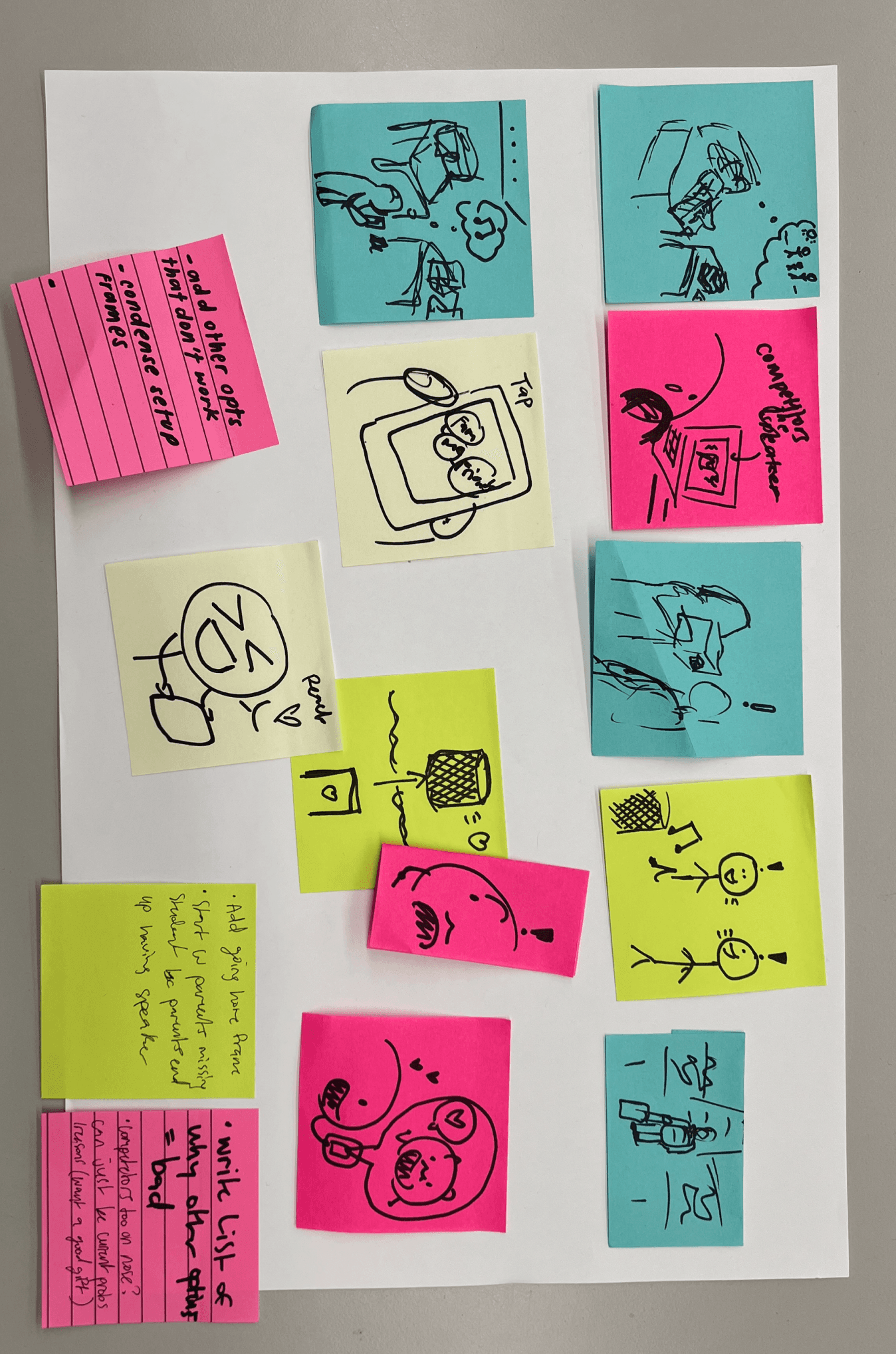
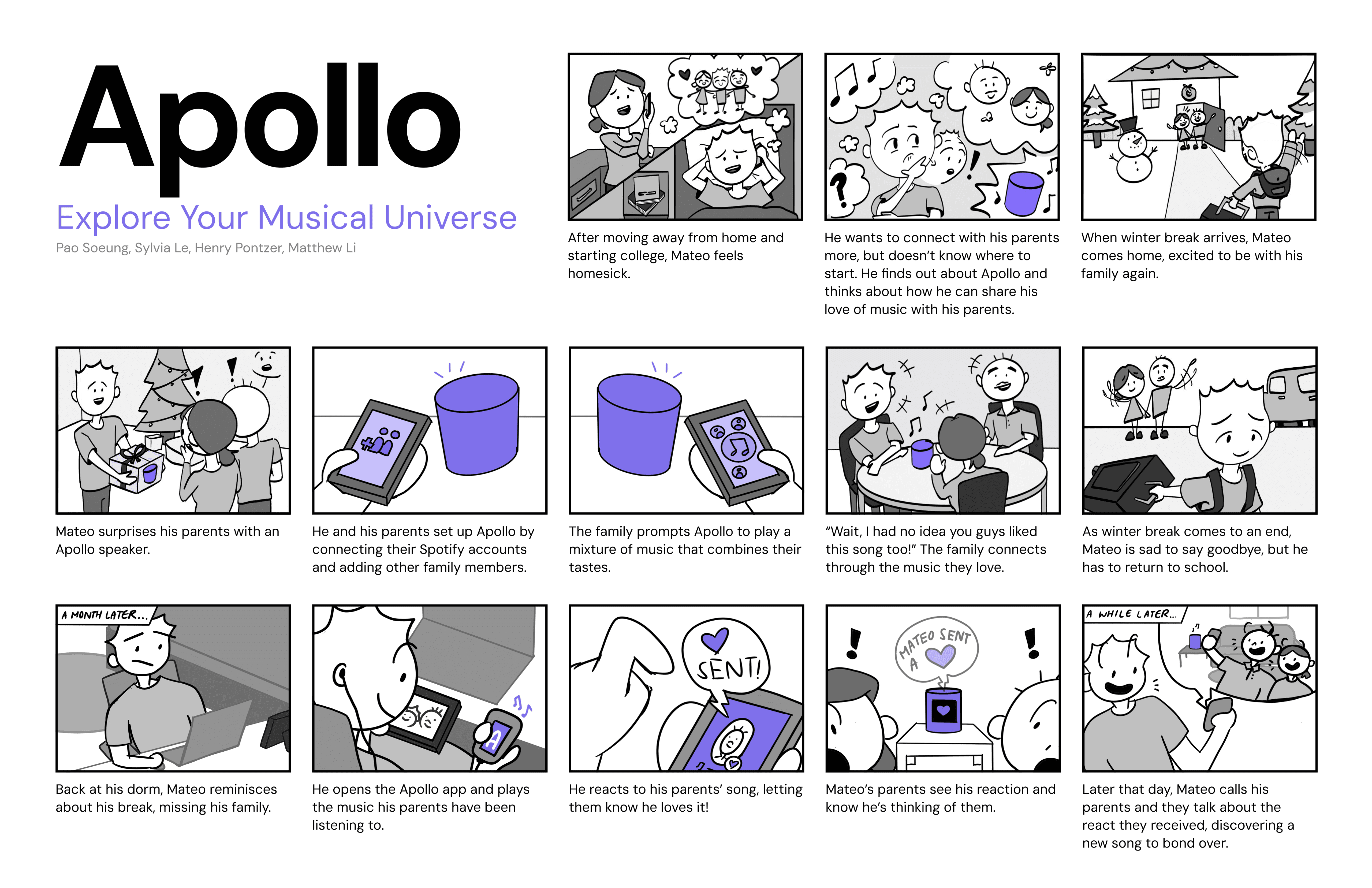
We used storyboarding to show the impact of our solution. First, we wrote out the general plot, then had each person draw a version of the storyboard. This was followed by a show and tell to choose and combine the frames that best conveyed the scene. From there, we did several rounds of feedback to finalize the story. Then, Pao and I illustrated it digitally.
Prototype Testing
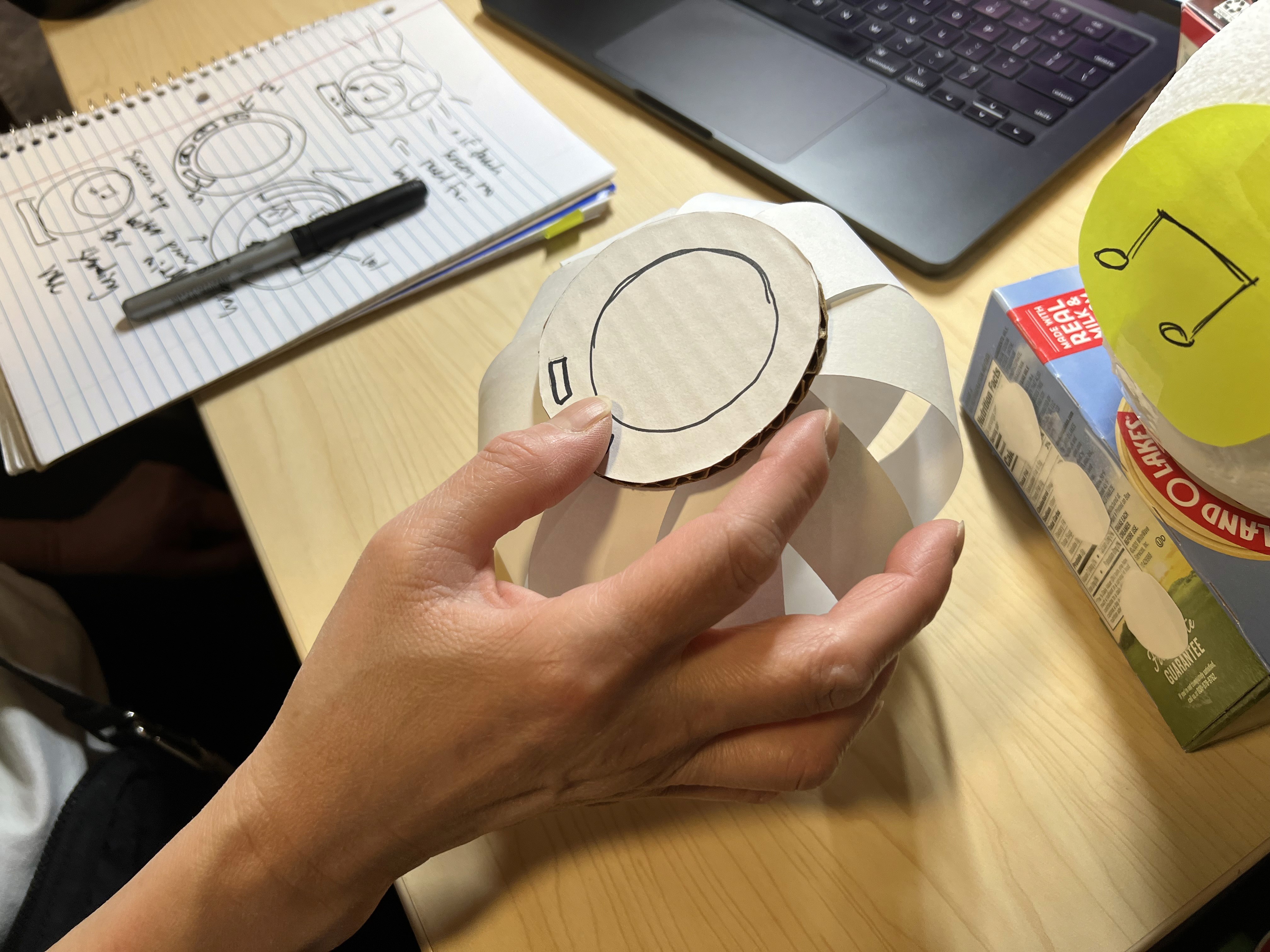
Our next step was to begin choosing what our speaker would look like, so we built and tested three prototypes with two older adults. The users were first prompted to show how they would interact with the speaker, for example, how they would change the volume, and then asked follow-up questions related to the comfort and aesthetics of the design. I designed one of the speakers and conducted one workshop.
Finalizing Apollo
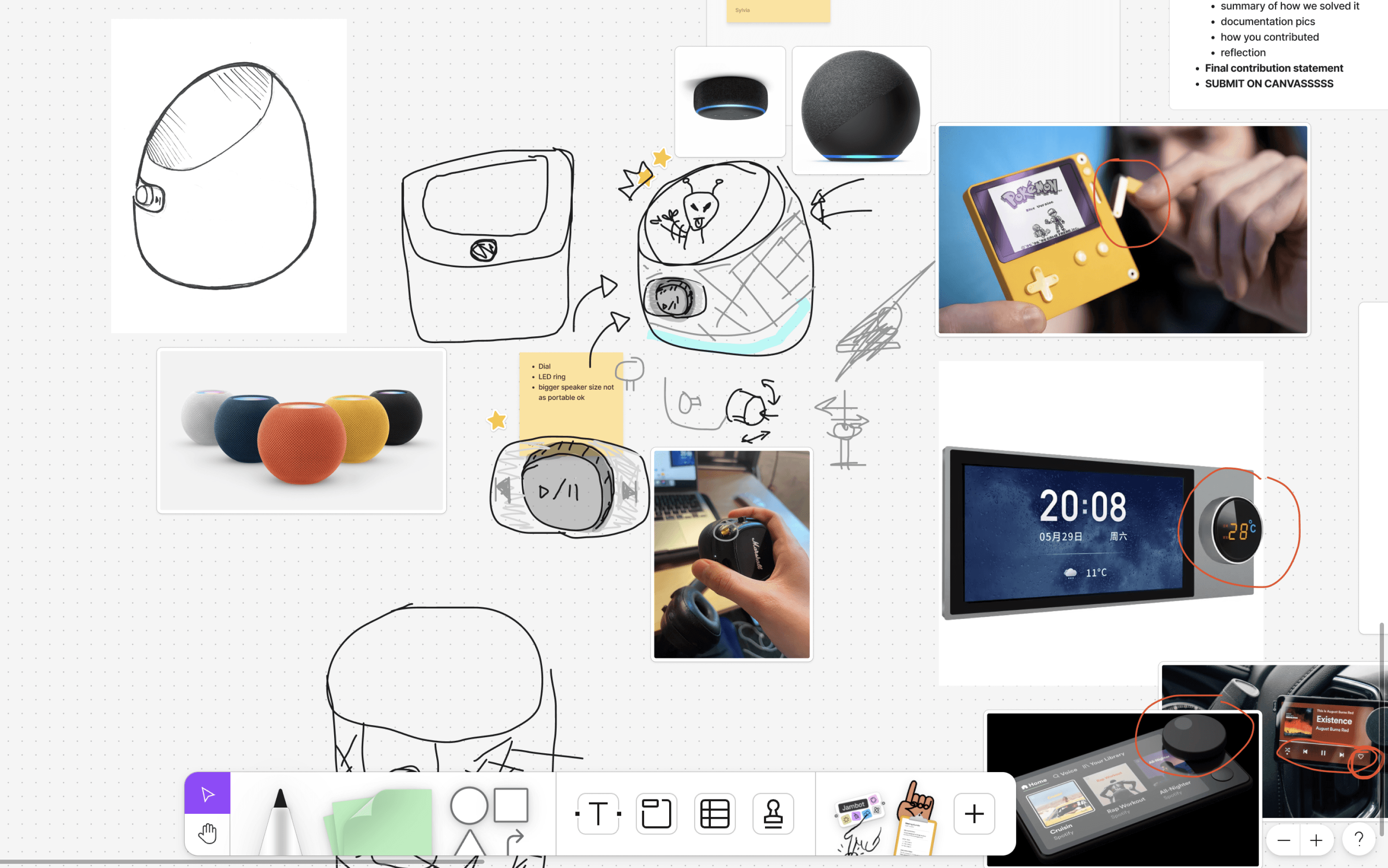
With the data gathered from the workshop, and the additional critique session with design seniors, we began finalizing the design of the speaker. The key change we made was swapping buttons for a dial, and deciding that the dial could be used for playback, as well as changing the volume.
Final
Our final deliverable consisted of a poster describing Apollo and a promotional video. On the poster are high-quality mock ups of the speaker, companion app, and key features.